

In the world of music production, the importance of a properly tuned control room cannot be overstated. Whether you’re mixing a song, mastering an album, or simply editing a track, your environment plays a crucial role in ensuring that what you hear translates well across various listening systems. This is where accurate monitoring becomes indispensable. However, before you can rely on your speakers, headphones, or other monitoring systems, your control room must be carefully set up and tuned to provide a true representation of your sound.
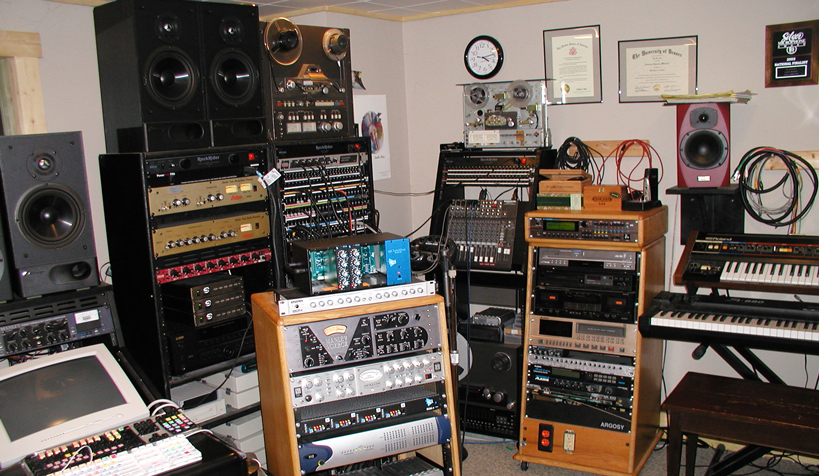
Let’s break down why tuning your control room is critical and how it affects the mixing and mastering process.
The Role of the Control Room in Audio Production
The control room is where the magic happens – where an engineer or producer has the opportunity to shape sound, balance elements, and make crucial decisions about the final product. However, the quality of the sound that’s being monitored within the control room depends on more than just high-quality monitors or headphones; it’s also about the room’s acoustics and how it interacts with sound. Without proper room treatment and tuning, even the best speakers can produce misleading results, leading to poor mixing decisions.
The Problem with Untreated Rooms: Acoustic Issues
Every room, to some degree, has inherent acoustic characteristics that will affect how sound behaves within it. These characteristics can either enhance or distort the accuracy of the sound you’re hearing. Common issues in untreated or poorly treated rooms include:
- Standing Waves: These occur when sound waves reflect off parallel walls and create reinforcement or cancellation at certain frequencies. This can result in exaggerated bass frequencies in some spots (too much low-end) or hollow midrange tones in others (too little low-end).
- Room Modes: These are specific frequencies that are either boosted or canceled out depending on the dimensions of the room. Room modes cause uneven frequency response, which makes it difficult to accurately judge bass, midrange, and treble levels.
- Flutter Echoes: These are caused by sound bouncing between two parallel surfaces, such as walls. The result is a ringing or echoing sound, which can blur transient details in your mix.
- Early Reflections: Sounds that bounce off nearby surfaces and return to your ears shortly after the direct sound can create phase issues and distort the perception of space and depth in your mix.
These acoustic problems make it challenging to accurately hear the full spectrum of sound and make informed decisions during mixing and mastering.
The Basics of Room Treatment
To address these issues, you must consider both passive and active treatment solutions for your control room. This process typically involves:
- Bass Traps: These are placed in the corners of the room, where low-frequency waves tend to accumulate. Bass traps help control low-end buildup and smooth out the bass response, making it easier to judge the balance of your mix without excessive low-end boominess.
- Acoustic Panels: These absorb sound across a broad range of frequencies and are typically placed on the walls at primary reflection points (the points where sound waves first bounce off). Acoustic panels can significantly reduce early reflections and flutter echoes.
- Diffusers: While absorptive materials like panels soak up sound, diffusers scatter sound waves across the room. This helps to maintain a natural sense of space while controlling excessive reflections. Diffusers are often placed on rear walls or ceilings.
- Monitor Placement: Speaker positioning is key to achieving a balanced and accurate sound. The general rule is to form an equilateral triangle between the monitors and your listening position. The monitors should be placed at ear level and positioned away from corners or reflective surfaces. Experimenting with the “sweet spot” is critical for ensuring accurate stereo imaging and depth.
The Importance of Room Calibration for Accurate Monitoring
Once you’ve treated the room, the next step is calibration. Room calibration refers to adjusting your monitoring system to compensate for the room’s acoustic characteristics. This is typically done through:
- Speaker Alignment: Ensuring that your speakers are correctly aligned with your listening position. Small adjustments in angle and distance can make a significant difference in how accurately you perceive sound.
- Frequency Response Measurement: Using a measurement microphone and software (such as Room EQ Wizard) to analyze the room’s frequency response can identify problem areas. This data is essential for making targeted adjustments in speaker placement or room treatment.
- Subwoofer Integration: If you’re using a subwoofer, it’s important to integrate it properly with your main monitors. Poor subwoofer integration can cause muddiness in the low end or create imbalanced bass frequencies that interfere with mix clarity. High-pass filters and phase alignment tools can help integrate subwoofers seamlessly.
- Use of Reference Tracks: Using professionally mixed and mastered tracks as a reference can help you assess how well your room tuning is working. If your room is calibrated properly, reference tracks should sound balanced and consistent across different monitoring systems.
The Benefits of Proper Room Tuning
- Accurate Frequency Response: When your room is tuned, you can trust that the sound you’re hearing is an accurate representation of the mix. This makes it easier to make decisions about EQ, compression, and other processing.
- Better Stereo Imaging and Depth: By controlling reflections and standing waves, room treatment can provide a clearer sense of space and dimensionality, allowing you to make better panning and depth decisions.
- Improved Low-End Translation: Proper bass management through bass traps and room calibration ensures that low-end elements like kick drums and bass lines are represented correctly, preventing them from sounding either too boomy or too weak.
- Minimized Fatigue: A properly tuned room minimizes unnatural distortions, which means you can listen for longer periods without experiencing listener fatigue. This is particularly important for long mixing and mastering sessions.
- Consistency Across Different Systems: When you’ve tuned your room and calibrated your monitors, your mixes will translate better across different playback systems, from consumer headphones to car speakers. This is crucial for the success of any track, as it ensures that it will sound great wherever it’s played.
Conclusion
Tuning your control room is not just about optimizing your monitoring system – it’s about creating an environment where the music can be accurately and reliably judged. By addressing acoustic problems, treating the room, and calibrating your monitors, you ensure that the decisions you make in the mixing and mastering stages are based on clear, accurate sound. Without proper room treatment and tuning, your mix could end up sounding very different when played on other systems, resulting in an unbalanced, misleading final product.
Take the time to optimize your control room, and the difference it makes in your work will be well worth the effort. The ability to make informed, confident decisions during mixing and mastering is invaluable – and it all begins with a properly tuned space.
Comments are closed.